)

Author: James Natividad | Senior Research and Insights Analyst
As AI technology reshapes industries worldwide, staying safe online has never been more urgent. Companies across sectors are responding by educating their customers, helping them recognize the biggest risks and the most common scams before they become victims.
AI voice cloning and deepfakes are among the most widespread scam tactics today. With just a few seconds of audio, images, or video, often pulled from social media posts, voicemails, or public recordings, fraudsters can convincingly recreate a person’s voice or likeness.
In an email campaign sent to its customers, Montgomery Bank pointed to several common voice cloning scams. In CEO fraud, scammers impersonate company executives in fake calls to trick employees into sending money. In family emergency scams, a cloned voice mimics a loved one in distress and asks for immediate financial help. Meanwhile, in celebrity endorsement scams, cloned celebrity voices promote fake products or investments.
 |
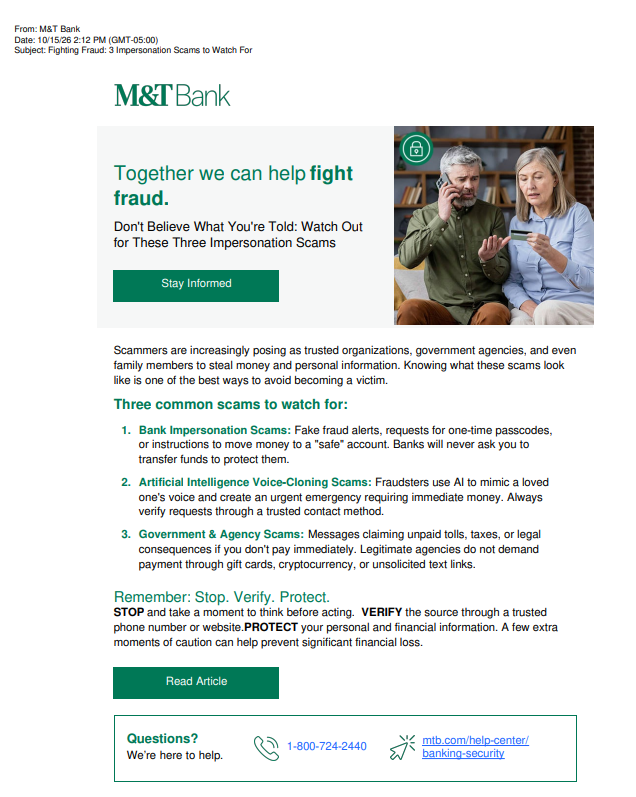
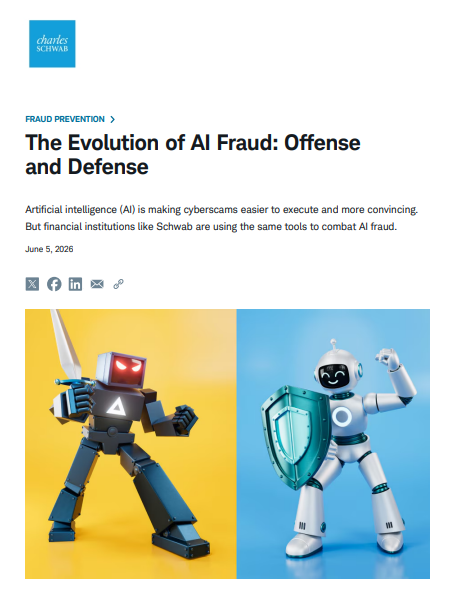
Bank of Hawai’i warned that AI chatbots can hold emotionally convincing conversations while posing as someone the victim knows, using detailed profiles built from public social media posts. M&T Bank described two common impersonation scams. In the first, scammers send fake fraud alerts and ask victims to move money to a “safe” account. In the second, they pose as government agencies and demand payment through gift cards or cryptocurrency. Charles Schwab noted that deepfake videos were used to create fake personas posing as renowned financial experts.
 |
 |
 |
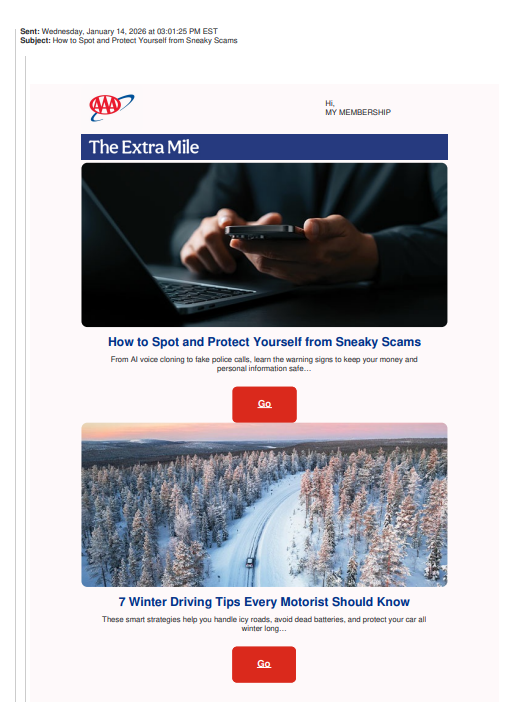
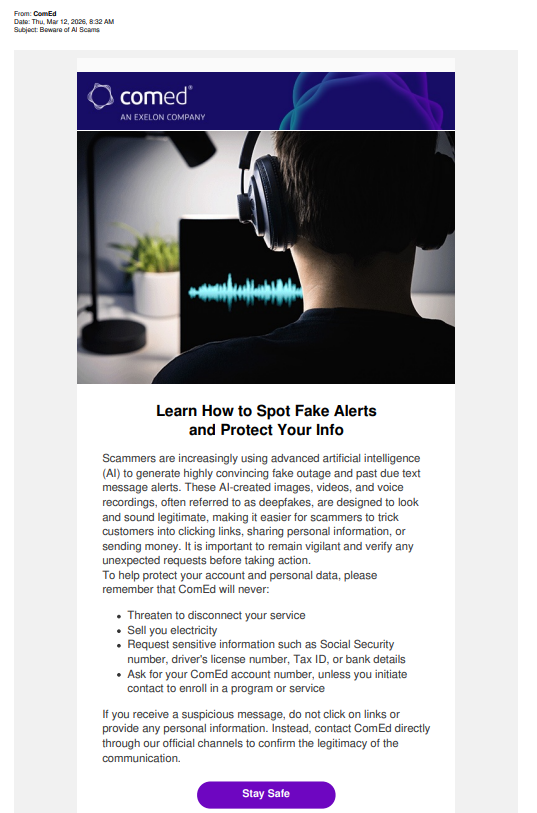
These threats reach well beyond financial institutions. AAA’s “Extra Mile” newsletter covered AI voice cloning and fake police calls, while ComEd warned customers that scammers are using advanced AI to generate convincing fake outage and past-due text alerts, deepfakes designed to look and sound legitimate.
 |
 |
Even so, consumers and business owners can take steps to protect themselves. Best practices include to avoid sharing answers to common security questions, such as maiden names, pet names, and schools, and limit what information is posted publicly. Review privacy settings to control who can see posts, but keep in mind that even “friends only” settings can reach a large audience that may include people you barely know.
Multi-factor authentication adds another important layer of security. Account monitoring and alerts give early warning of fraudulent activity. Credit freezes and fraud alerts stop fraudsters from opening new accounts in someone else’s name, even if they already have personal information. Several institutions also recommend setting up a family safe word or password to verify identity in an emergency.
Education alone cannot stop fraud, but it gives people the habits that make them harder targets. No single safeguard is foolproof, but combined, these steps make it much harder for fraudsters to succeed.