)

Author: Anna Behe | Director, Research & Insights
For credit card marketers operating in a competitive, highly regulated market, applying behavioral science principles effectively can be the competitive edge needed to drive action. Competiscan reviewed direct mail and email marketing campaigns sent in Q3 to better understand ways that issuers were implementing tactics beyond the ever-present ones of Urgency and Scarcity.
The Endowment Effect
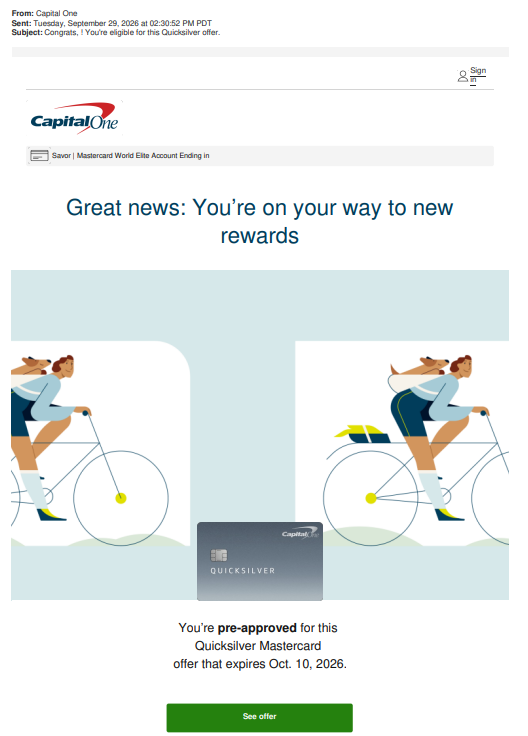
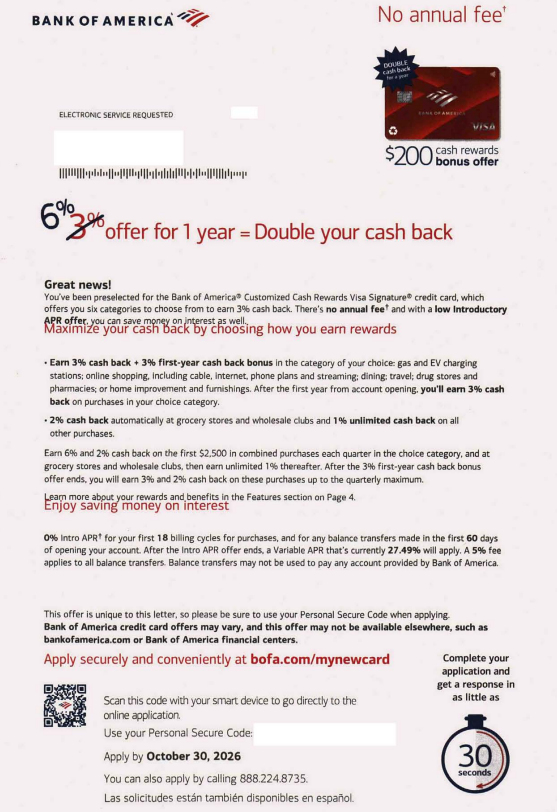
The Endowment Effect describes our tendency to place greater value on something when we feel that we already own it. Issuers activated this by presenting an offer or benefit as belonging to the recipient. Capital One used the phrase, “you’re on your way to new rewards” in a pre-approval offer. Bank of America used “bofa.com/mynewcard” as the application URL. This copy makes it feel like consumers are giving something up if they don’t accept the offer.
 |
 |
The Framing Effect
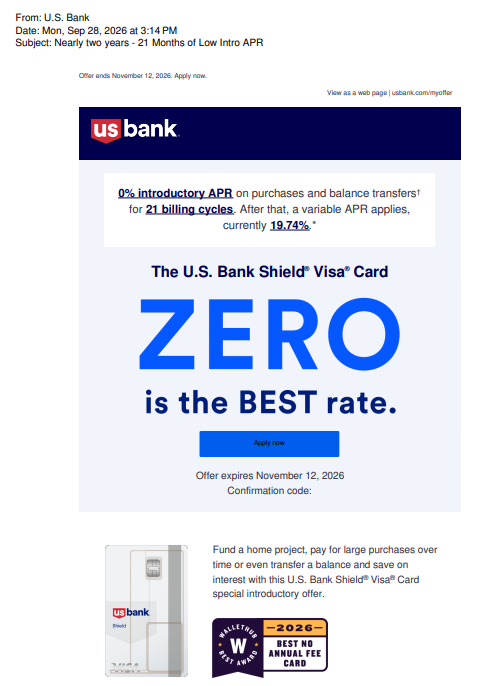
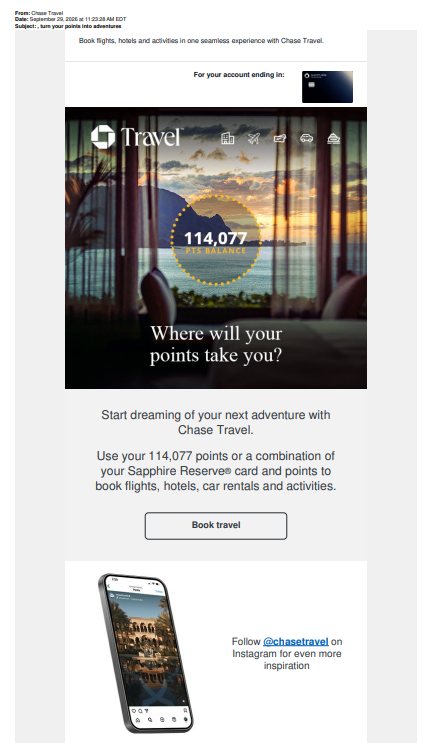
The Framing Effect influences decisions by changing how the same information is presented. U.S. Bank described a 21-billing-cycle interest-free period as “nearly TWO YEARS,” making the duration feel more substantial. U.S. Bank also positioned credit as a way to “fund a home project” or “pay for large purchases over time,” shifting attention from borrowing to achieving a practical goal. Chase used the subject line “turn your points into adventures” to reframe the abstract value of points. Framing helps to change how consumers perceive and respond to an offer.
 |
 |
Temporal Discounting
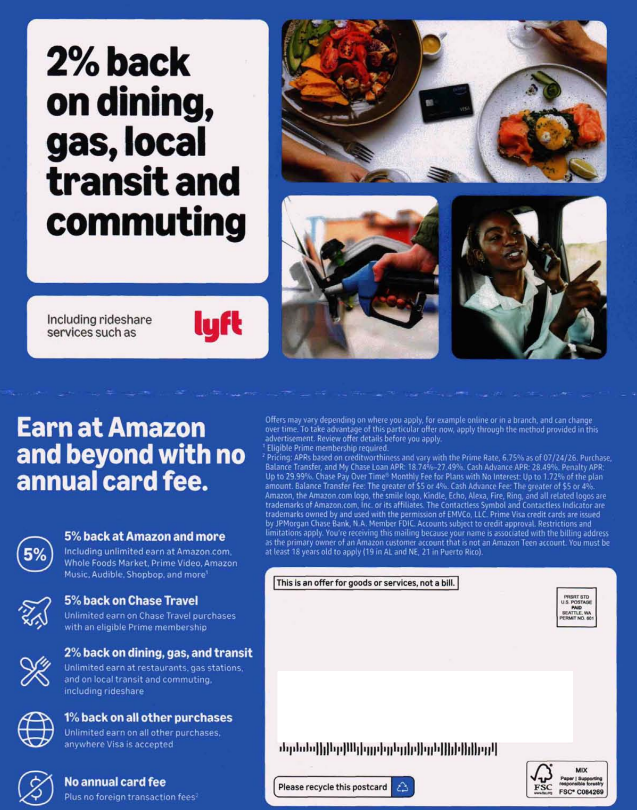
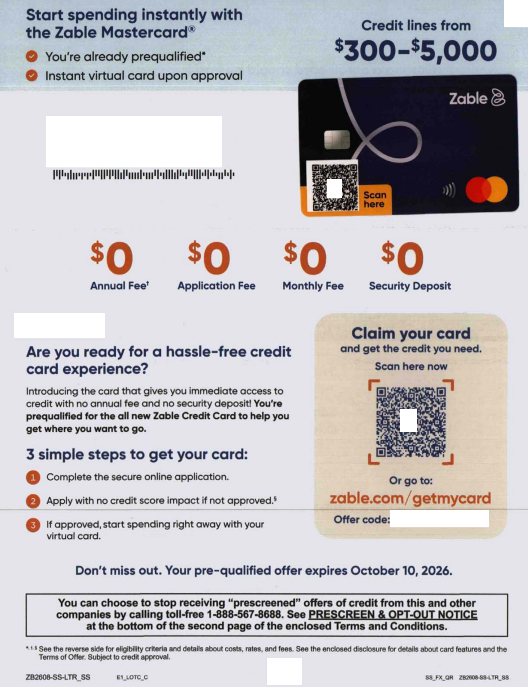
Temporal Discounting is our tendency to perceive a reward as less valuable the further away it is received. The Chase Amazon Prime Visa card offered a $150 gift card instantly upon approval, and the Zable Credit Card highlighted how consumers could “start spending as soon as today!” in an acquisition offer. Both examples appeal to consumers’ preference for immediate gratification.
 |
 |
Social Proof
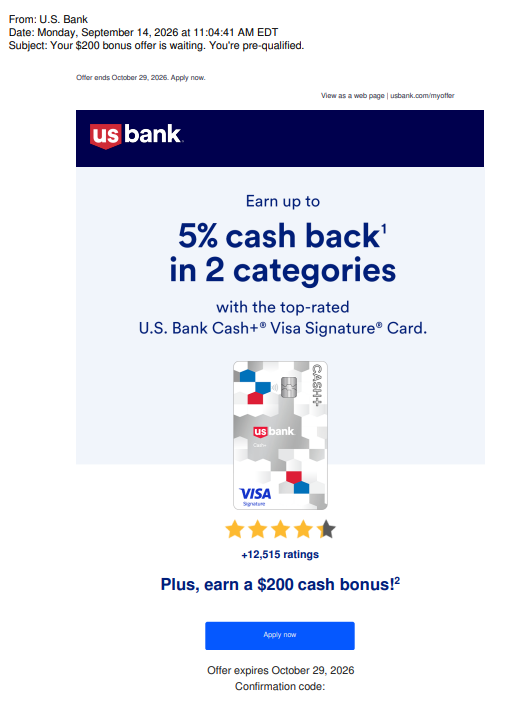
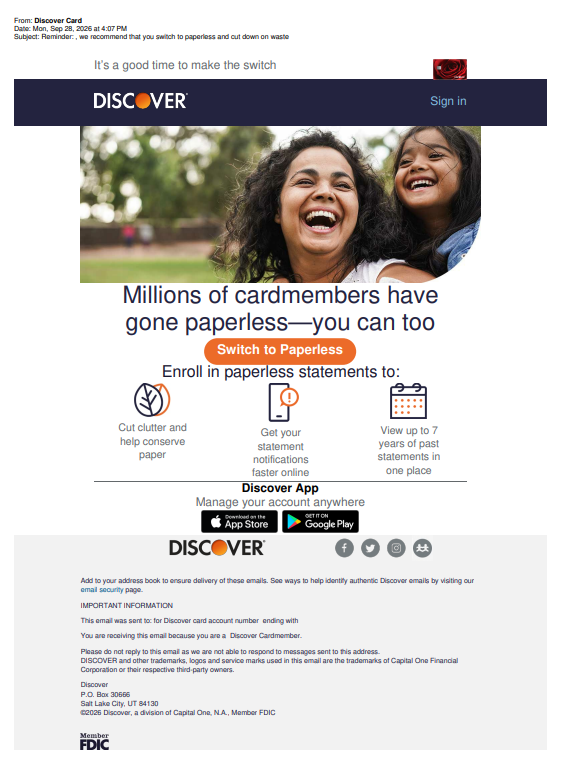
Social proof is our tendency to look at other people’s actions when deciding what to do, especially when we are uncertain. U.S. Bank emphasized its 12,515 ratings for the Cash+ Visa Signature Card and added the NerdWallet Best-Of Awards accolade to build credibility. Discover used social proof to convince cardmembers to go paperless: “millions of cardmembers have gone paperless – you can too.” When used properly, social proof can establish trust and reduce uncertainty.
 |
 |
Autonomy Bias
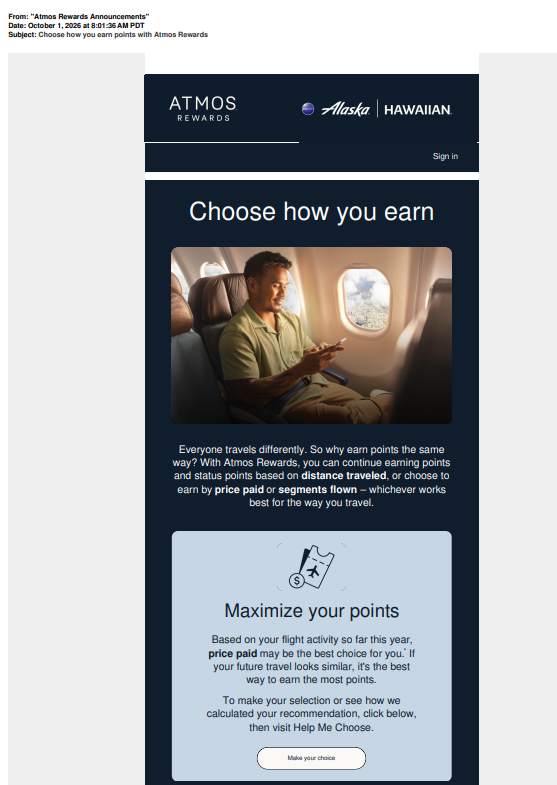
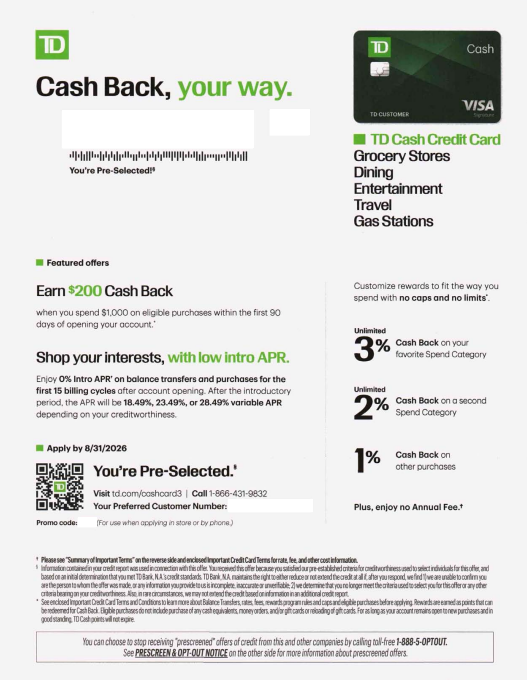
Autonomy bias reflects the preference to be in control. Issuers have tapped into this principle by emphasizing flexibility and giving consumers choices. TD Bank frequently used the headline, “Cash Back, your way,” in TD Cash Credit Card acquisition offers to highlight how its cash back structure enables customization and choice. Atmos Rewards allows consumers to choose how they earn points, noting in an email campaign that “Everyone travels differently. So why earn points the same way?” Marketers can influence action by positioning customers as active decision makers, instead of passive recipients.
 |
 |
Final Thoughts
While a wide range of behavioral science principles were used across credit card campaigns in Q3, there is still an opportunity for issuers to implement them in marketing communications. Some underutilized principles included the Goal-Gradient effect, in which motivation increases as the goal gets closer; Status Quo Bias, the preference for keeping things the way they are; and the Rhyme-as-Reason Effect, the belief that rhyming statements are more truthful. Understanding how issuers are leveraging behavioral science tactics in marketing can help inspire new ways of influencing behavior in your own marketing campaigns.